
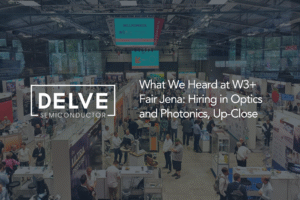
What We Heard at W3+ Fair Jena: Hiring in Optics and Photonics, Up-Close
Back from W3+ in Jena, and one moment captured the city for us.
We were chatting with a commercial director when he stopped mid-sentence and pointed across the hall. A few booths away stood the person who had reviewed his PhD more than 20 years ago.
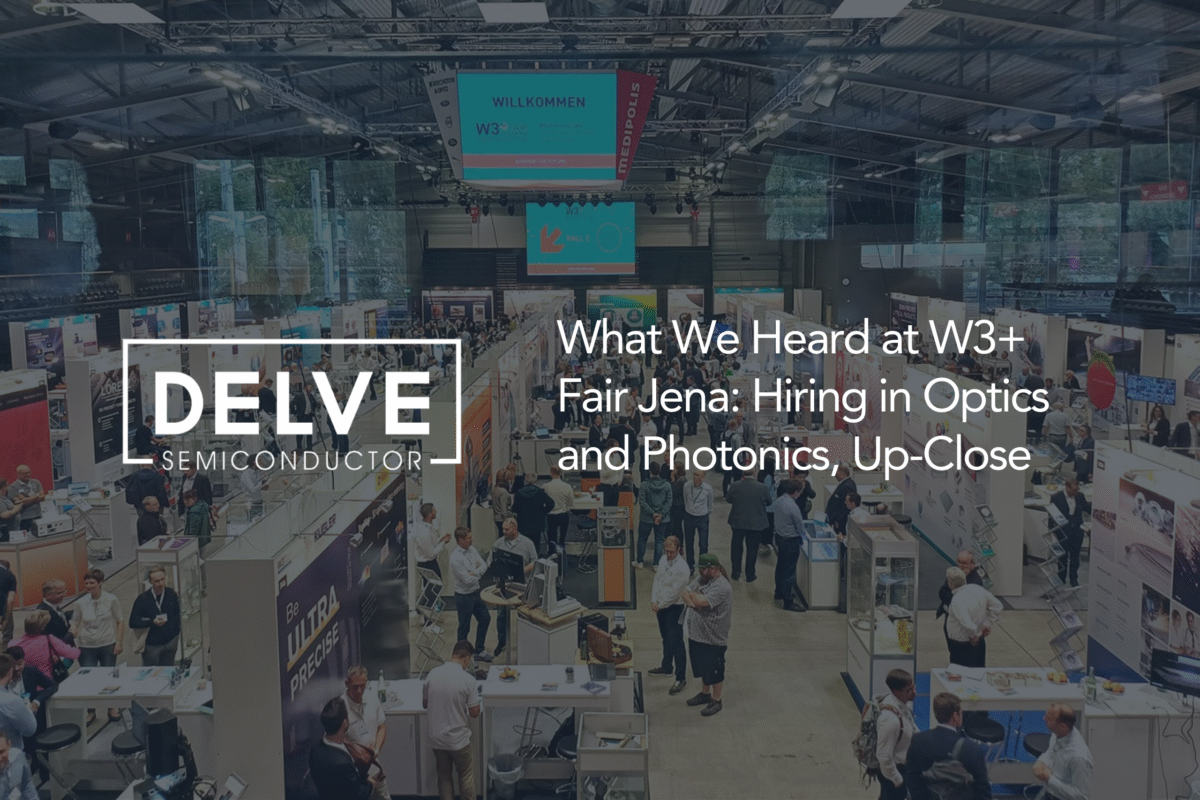
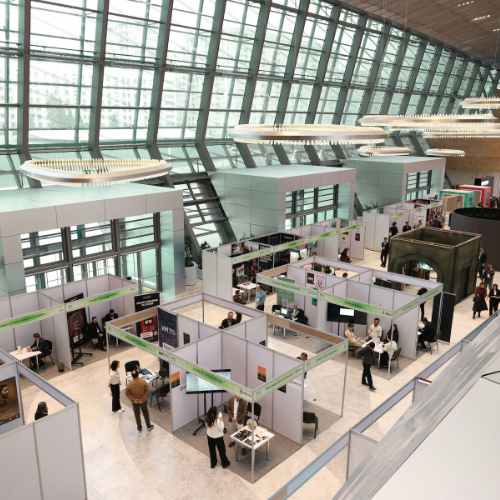
It was a small moment, but it summed up the two days for us. More than 250 exhibitors and visitors from over 20 countries came to the Sparkassen-Arena on 23–24 September 2026. Yet what stood out most was how closely connected the people of Jena’s optics and photonics community are, that closeness shapes how companies grow here, and how they hire.
Here is what we saw and heard, and why it matters for anyone building a team in optics, photonics or metrology.
Jena up-close
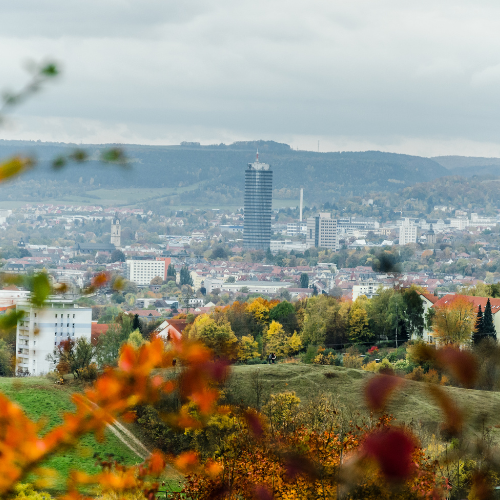
In Jena, optics and metrology aren’t just industries. They are part of the city’s identity. The story runs from Carl Zeiss, Ernst Abbe and Otto Schott to today’s ZEISS, SCHOTT and Jenoptik, and to a large community of SMEs, start-ups and research institutes. Many people here have known each other for decades, some for generations.
That network of trust is one of the region’s biggest strengths. It also means that reputation and relationships matter a great deal. If you want to grow and hire in Jena, you need to understand how the community is connected.
We stayed near Spittelplatz and walked everywhere. Jena is compact, easy to get around and full of character. For candidates thinking about a move, that is more of a selling point than people might expect.

Jena in a few facts
- Over 175 years of optics. Carl Zeiss opened his workshop in Jena in 1846. Together with Ernst Abbe and Otto Schott, whose glassworks followed in 1884, he laid the foundations of modern optics.
- A university since 1558. Friedrich Schiller University is one of Germany’s oldest, and today it works closely with Fraunhofer IOF, Leibniz IPHT and the Ernst Abbe University of Applied Sciences.
- 19,600 people work in photonics in Thuringia, most of them in and around Jena. The sector generated €4 billion in revenue in 2024 (OptoNet Photonics Report 2025).
- 72% of that revenue is exported, and companies reinvest around 15% of sales in research and development.
- Still growing. Jenoptik is expanding its optics production in Jena, with around 50 new jobs for technicians and engineers.
Trends shaping the region
The programme at W3+ went well beyond classic optics. Five trends came through clearly, both on the stands and in our conversations.
Photonics is moving into new markets. The fair was built around medtech, aerospace and space, defence and dual-use, quantum and deep tech. Each new market needs people who can explain the technology to a new type of customer. That drives demand for Application Engineers and technically strong sales people.
The customer base is international. With most revenue coming from exports, companies need commercial and service staff who can support customers abroad. Think travel-ready Field Service Engineers, multilingual Technical Sales and Application Engineers used to international projects.
Service is a growth lever. As the installed base of complex optical, imaging and metrology systems grows, installation, maintenance and support become strategic. Demand for FSEs and service leaders stays high.
Disciplines are converging. Products increasingly combine optics, electronics, software and precision mechanics. Companies want engineers who are comfortable across several disciplines, not only in one.
A strong academic pipeline. Friedrich Schiller University, Ernst Abbe University of Applied Sciences and institutes such as Fraunhofer IOF and Leibniz IPHT supply excellent graduates and researchers. The next step is building the experienced, customer-facing layer on top of that foundation.
What companies told us
We went to Jena to listen, not to pitch. We asked about growth plans, market trends and what gets in the way. The same themes came up again and again.
- SMEs are on a growth path. Many have concrete plans to scale in the near future. The universities give them a strong base of talent, and the next step is adding experienced engineers to lead that growth.
- Smaller companies have their own strengths. Next to the region’s well-known names, SMEs can offer more ownership, shorter decision paths and a real impact on the product. That is a story worth telling candidates, clearly and confidently.
- Companies are looking beyond the usual circles. More and more of them welcome talent from neighbouring high-tech fields, such as semiconductors, electronics or precision engineering, and value the fresh perspective it brings.
- Hybrid profiles make the difference. People who combine technical depth, industry experience and customer skills are rare and highly valued. This applies especially to Field Service Engineers, Application Engineers and Technical Sales. Generic job ads rarely reach them.
- A close-knit market calls for discretion. When everyone knows everyone, candidates and employers alike appreciate a confidential, well-judged approach.
- HR teams are stretched across many roles. In lean SMEs, generalist HR teams often handle everything at once. A specialist partner can take the most niche searches off their plate.
- Relocation is about people, not boxes. The move itself is logistics. Helping someone and their family feel at home in Jena is what makes them stay.
- The best candidates are open to the right conversation. Most experienced specialists are employed and not actively looking. A personal approach and an honest, credible story about the role and the company can spark their interest.
How Delve Search can help
This is the work we do every day. We find hard-to-reach specialists in Germany and Switzerland, tell your story credibly to people who are not actively looking, and support relocation so new hires settle in well. Our focus is on the roles that are hardest to fill: Field Service Engineers, Application Engineers, Technical Sales and technical leadership.
We work on a no win, no fee basis, so there is no risk in starting a conversation.
A big thank you to everyone who took the time to talk with us in Jena. If you are building a team in optics, photonics or metrology, we would be glad to continue the conversation and hear your story. Get in touch with us here.

Speak with a search specialist
Start a confidential conversation →
LinkedIn: Delve Search
Email: info@delverec.com
Phone: +49 89 5419 5924

Share This Blog
Recent Articles
What We Heard at W3+ Fair Jena: Hiring in Optics and Photonics, Up-Close

Why Advanced Manufacturing in the US Is Facing a Workforce Bottleneck

Different Industries, Same Problem: The Global Talent Constraint

Carbon Fibre in Aerospace: Scaling Innovation vs Scaling Talent

The Composites Boom in US Aerospace — And the Talent Challenge Behind It