
Categories
Candidates Clients

Building a winning team: Recruiting talent for advanced engineering start-ups and SME’s

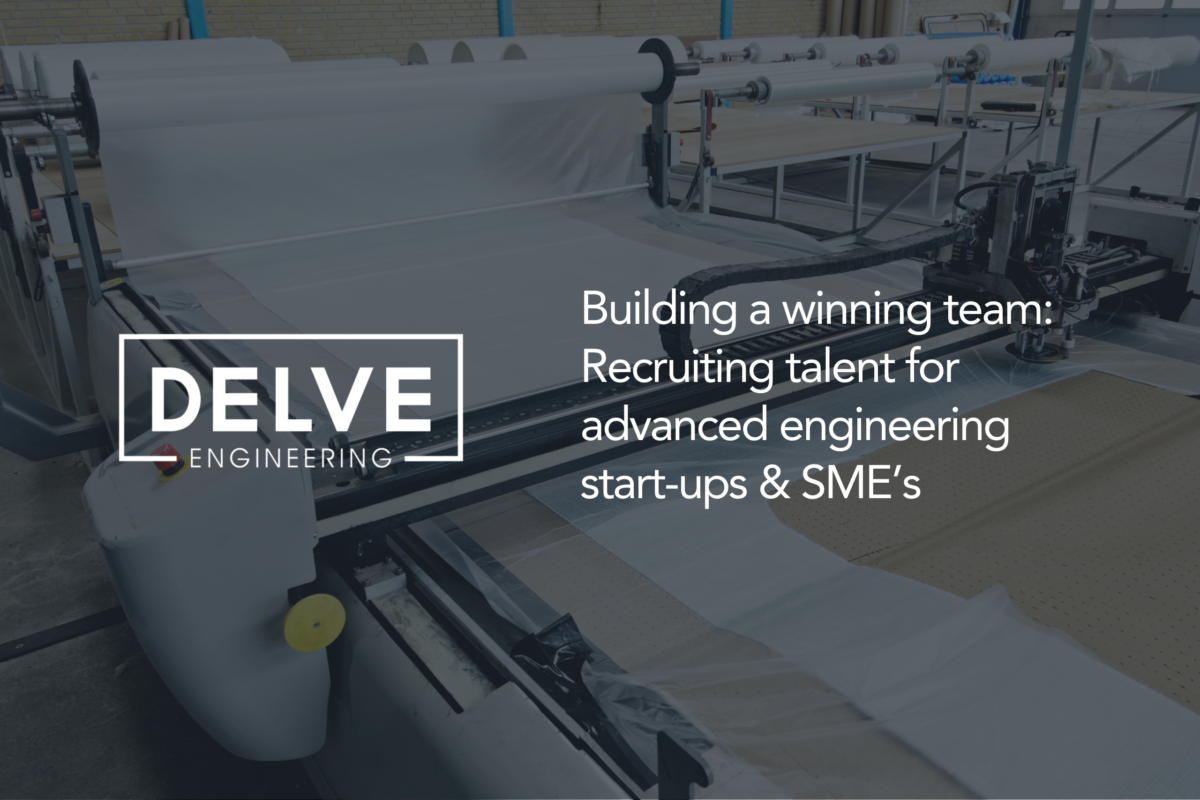
Fibreglass cutting machine

Building a Winning Team: Recruiting Talent for Advanced Engineering Start-Ups & SME’s

By Andrew Ellis, Principal Search Consultant

As Advanced Engineering businesses grow, whether that be via product innovation, external investment, geographic expansion or similar, invariably one of the most significant challenges that organisations have is hiring.  Or rather hiring the “right” people.

All too often, I’ve seen businesses delay their hiring, often for one of the below key reasons;

  • It’s difficult and takes time – If there’s nobody internally to run a recruitment process (particularly if it’s a position that requires a significant amount of leg work to get to the right person), then invariably it won’t sit at the top of anyone’s priority list until absolutely necessary.  And if “necessary” is the point in time when you go to market, then when the candidate actually starts, businesses are invariably 9-12 months where they need to be from a hiring pattern (once recruitment process, notice periods etc are taken into a account).
  • Market conditions – We’re in unstable times and it currently feels as if society is lurching from crisis to crisis every 6 months or so.  Obviously, this is going to impact on businesses and there’s always a mindest creep; “Do we hire now?”, “Can it wait until things are a bit more stable?”. I’d say if there’s not a fundamental reason not to hire, then earlier is better – particularly in highly competitive or niche growth markets.
  • What we want isn’t available to us – Not as true as perhaps during 2020-2021.  I’ve noticed a sizeable shift in the market of candidates wanting to take on roles within organisations that are innovative, offer career development and companies, generally where there is a collaborative culture.  In some instances this has meant proverbial “Big Hitters” being willing to reduce their fixed compensation packages in order to realign their personal lives or to get involved in an organisation during an exciting growth phase where there are longer term benefits.  

At Delve Search we work closely with clients to understand each of their own needs and requirements and get a feel for what makes each business unique. To discuss our services further you can reach out to me on andrew.ellis@delverec.com.

Linkedin – Andrew Ellis


Categories
Candidates Clients

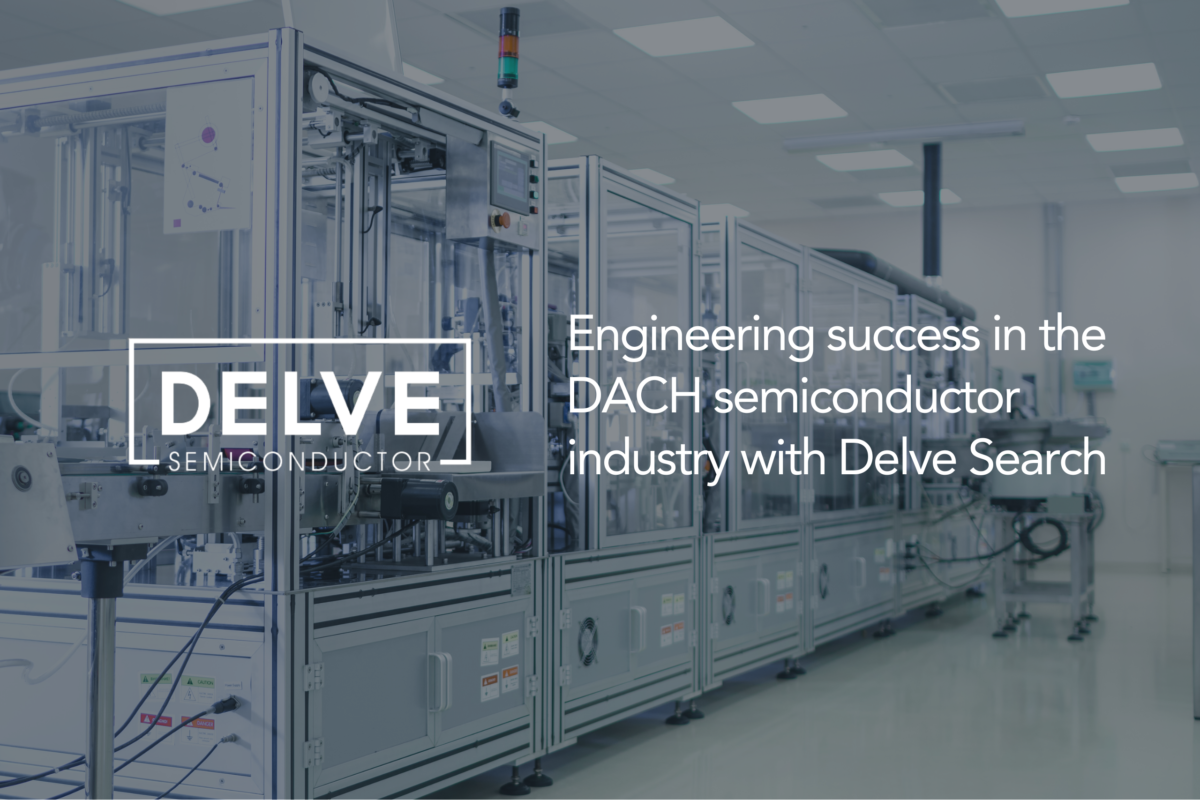
Engineering success in the DACH semiconductor industry with Delve Search

Semiconductor manufacturing machinery

Engineering success in the DACH semiconductor industry with Delve Search

by Claas Köhler

Embarking on an engineering career in the semiconductor equipment manufacturing industry in the DACH region involves more than just technical expertise. It’s a journey that combines cultural awareness, niche specialisation, trend insight, and strategic career moves. And when it comes to finding the right opportunities, Delve Search play a crucial role.

Embrace the cultural nuance – The DACH region, encompassing Germany, Austria, and Switzerland, is culturally rich and diverse. In these countries, work culture highly values precision, punctuality and quality. As an engineer looking to thrive in this environment, understanding and adapting to these cultural values is key. Remember, successful integration into the local work culture can make a significant difference in your career growth.

Find your niche – In the semiconductor industry, specialisation can significantly boost your career. Whether your interest lies in nanotechnology, process integration, or another specific area, becoming an expert in your chosen niche will set you apart. Dedicate time to mastering your specialty and stay updated with the latest advancements.

Stay on top of industry trends – The semiconductor industry is dynamic, with new trends constantly shaping its future. From sustainability in manufacturing processes to the integration of AI in semiconductor technology, staying informed about these trends is essential. Being knowledgeable about the current and future directions of the industry can position you as a forward-thinking and valuable asset to employers.

Leverage headhunters for opportunities – In the unique landscape of the DACH region’s semiconductor industry, finding the right opportunities can be challenging. This is where our experts become invaluable. Our search consultant have a deep understanding of the industry and can connect you with opportunities that align with your skills and career aspirations. We focus on creating matches that benefit both the engineer and the employer, ensuring a symbiotic relationship that fosters growth and innovation.

Building a robust professional network – A strong professional network is a powerful tool in the semiconductor industry. Attend relevant industry conferences, seminars, and workshops. Engage with professional groups, both online and offline. These connections can offer you insider knowledge, mentorship, and awareness of unadvertised job openings.

In Conclusion, your journey as an engineer in the DACH semiconductor equipment manufacturing industry is multi-faceted. It’s about merging your technical skills with cultural adaptability, niche expertise, staying abreast of industry trends, and making strategic career moves. With the support of a specialised headhunting firm like Delve Search, you can navigate this path more effectively, unlocking doors to fulfilling career opportunities in this exciting field.

Delve Search stand ready to assist you on this journey, providing expert guidance and access to prime opportunities in the DACH semiconductor sector.

Reach out to see how Claas can support you with your next career opportunity:

Call: +49 89 54195011

Email: claaskoehler@delverec.com

LinkedIn: Claas Köhler

Categories
Candidates Clients

How I solve your toughest hiring challenges

A chess board being used to represent strategy and planning

“How I Solve Your Toughest Hiring Challenges”

By Gareth Foden, Director and Head of Life Science

In the fast-paced world of recruitment, businesses are constantly seeking ways to streamline their hiring processes, attract top-tier talent, and mitigate risks associated with bringing new members into their teams. As someone with 12 years of recruitment experience, I understand the unique challenges that organisations face and have honed my skills to provide comprehensive solutions.

In this blog, I’ll explore the key problems I solve for my clients, ranging from time to hire and quality assessment to taking the value proposition to the market and managing risks effectively.

1. Time to hire: Accelerating your recruitment process – One of the most critical challenges in the hiring process is the time it takes to find and onboard the right candidates. Time is money, and delays in recruitment can lead to missed opportunities and increased workloads for existing team members. I specialise in optimising the recruitment timeline, leveraging efficient sourcing strategies, and employing advanced technologies to ensure a swift and effective hiring process.

2. Quality assessment: Ensuring the best fit for your team – Finding candidates is one thing, but identifying the right fit for your organisation is another challenge altogether. My expertise lies in conducting thorough quality assessments to ensure that the candidates not only meet the required skills and qualifications but also align with the company culture. This meticulous evaluation aims to guarantee that every hire contributes positively to your team dynamics and overall success.

3. Taking your value proposition to the market – In today’s competitive job market, attracting top talent requires a compelling value proposition. I work closely with organisations to articulate their unique selling points and effectively communicate them to potential candidates. By showcasing the company’s culture, benefits, and growth opportunities, I help create a strong employer brand that resonates with top-tier talent, making your organisation a magnet for great people.

4. Expertise in niche talent pools – Many industries require specialised skill sets, and finding candidates with niche expertise can be a daunting task. My extensive experience includes navigating and understanding niche talent pools. Whether it’s C-Suite, Director, commercial or niche technical, I deploy the same robust processes to deep dive in to these talent pools and identify the best people for your business.

5. Objective feedback – Recruitment roadblocks can often arise internally, hindering the progress of the hiring process. My role extends beyond just finding candidates – I provide objective feedback and insights from an external perspective. This helps organisations identify and address any internal challenges, ensuring a smooth and efficient recruitment process.

6. Risk management – Bringing new team members on board always carries inherent risks. I specialise in risk management throughout the recruitment process, from conducting thorough interviews to assessing potential cultural fit. By mitigating risks early in the hiring process, I contribute to the long-term success and stability of the teams I help to build.

Conclusion: In the ever-evolving landscape of recruitment, I am dedicated to solving the multifaceted challenges faced by businesses. From expediting the hiring process to ensuring quality assessments and managing risks, my expertise spans the entire recruitment journey. By partnering with me, organisations can not only optimise their hiring processes but also build teams that drive success and innovation.

Get in touch to see how I can support you in your search for talent:

LinkedIn: Gareth Foden

Email: gareth.foden@delverec.com

Categories
Candidates Clients

10 Mind-blowing facts that prove composites aren’t just for spaceships!

An image of a space ship in outer space

10 Mind-blowing facts that prove composites aren’t just for spaceships!

By Louise Shorrock

The composites sector, a realm where innovation meets craftsmanship, holds a treasure trove of fascinating facts that often go unnoticed. In this blog, we embark on a journey through the world of composites, uncovering unique and surprising aspects that contribute to the sector’s allure.

Moon landing, anyone… Composites weren’t just bystanders in the space race; they were the silent heroes. Remember the Apollo 11 lunar module that touched down on the moon? Packed with composites, it proved you can be lightweight and tough as nails – a must-have for interstellar adventures.

Super strong, super light: Carbon fiber’s got it all. This isn’t your grandma’s yarn. Carbon fiber is five times stronger than steel, but lighter – talk about defying physics! So, it’s no wonder you’ll find it in everything from sleek race cars to soaring airplanes.

Ancient egyptians were way ahead of the game… Don’t be fooled by fancy labs; people have been rocking composites for millennia. Over 3,000 years ago, the Egyptians were using straw-reinforced clay to build stronger, longer-lasting bricks. Talk about sustainable!

Nature’s masterpiece: Bamboo is a built-in composite… Mother nature knows best, and bamboo proves it. This natural wonder combines tough fibers with a strong matrix, making it a sustainable alternative for everything from buildings to furniture. Talk about green tech with a prehistoric twist.

From astronauts to athletes: Composites heal too. They’re not just for spaceships and fancy cars, you know. Composites are making waves in the medical field, with carbon fiber finding its way into bone plates and artificial joints. Strong, biocompatible, and ready to mend broken bodies – who knew?!

Say goodbye to boxy designs: Composites bend the rules – Unlike their rigid counterparts, composites are all about flexibility. You can mold them, twist them, and shape them into mind-bending structures that would leave traditional materials weeping in the corner. Get ready for some seriously out-of-this-world designs!

Bulletproof badass: Protecting lives with Aramid. Kevlar, anyone? This wonder fiber, used in everything from bulletproof vests to firefighter gear, showcases the life-saving potential of composites. They may look sleek, but they’re tough as nails when it comes to keeping us safe.

Green is the new black: Sustainable composites are here: Forget the “composites are bad for the planet” myth. Researchers are busy developing eco-friendly versions, like those made from recycled materials. So, you can have your high-tech materials and protect the Earth too – win-win!

Bridges to the future: Composites span more than just gaps. Move over, steel! Composite bridges are popping up everywhere, boasting longer lifespans, rust-proof attitudes, and lower maintenance costs. They’re like the superheroes of infrastructure, ready to connect us for generations to come.

From your phone to your car, composites are everywhere! Look around – that sleek phone case, the lightweight parts in your car, even the tennis racket you swing every weekend – they’re all hiding a secret, they’re made with composites! These versatile materials are woven into the fabric of our daily lives, proving they’re not just a futuristic fad.

As we unravel these intriguing facts within the composites sector, it becomes evident that these materials are not just a technological marvel but a key player in reshaping industries across the globe. The ongoing innovations, coupled with the historical roots of composite materials, emphasise their enduring impact on the way we design, build, and interact with the world around us. The composites sector, with its rich history and boundless potential, continues to be a source of inspiration for engineers, scientists, and innovators alike.

Get in touch with Louise to see how she can support you in your search for out of this world talent:

Call: +44 1606 212020

Email: louise.shorrrock@delverec.com

Categories
Candidates Clients

Navigating the green frontier: Sustainability challenges in the semiconductor industry

Semiconductor chip

Sustainability in Semiconductor Industry: Key Challenges and Solutions

The sustainability in semiconductor industry is under more scrutiny than ever. As demand for electronics grows, so does the environmental impact of semiconductor production. High water use, fossil fuel dependency, greenhouse gas emissions, and e-waste all contribute to mounting sustainability challenges. Semiconductor companies must now take long-term action to reduce emissions, cut power consumption, and adopt green technologies that support a sustainable future.

The Environmental Impact of Semiconductor Manufacturing

Modern semiconductor production is resource-intensive and energy-hungry. Fabrication plants consume large amounts of electricity and water. Many rely heavily on fossil fuels, contributing to high levels of greenhouse gas emissions.

Increased awareness of this environmental impact is pushing semiconductor companies to rethink how chips are made. Leading firms such as Taiwan Semiconductor Manufacturing Company (TSMC) have already set ambitious goals to reduce emissions in global operations by 2040.

Key Sustainability Challenges

1. Fossil Fuel Dependency

The energy used to power cleanrooms, operate equipment, and maintain temperature control is still largely sourced from fossil fuels.

What can be done:
Invest in renewable energy contracts. Solar and wind can reduce reliance on fossil fuels while cutting long-term operational costs.

2. High Power Consumption

The power consumption of semiconductor fabs is immense, with each advanced node requiring more energy than the last.

What can be done:
Upgrade to more efficient manufacturing equipment. Use AI to monitor energy use and optimise processes.

3. Water Usage

Fabrication facilities use vast amounts of ultrapure water to clean silicon wafers. This stresses local water supplies, especially in areas already facing shortages.

What can be done:
Install water recycling systems and reduce waste by improving process efficiency.

4. Chemical Waste and Pollution

Many chemicals used in chip production are toxic and hazardous if improperly managed.

What can be done:
Switch to safer alternatives through green semiconductor manufacturing practices. Improve containment, treatment, and disposal methods.

5. E-Waste and Recycling

Discarded chips and electronics often end up in landfill. Recovering rare metals from old components remains difficult.

What can be done:
Design for disassembly. Encourage take-back schemes. Invest in better methods to recycle semiconductors efficiently.

6. Supply Chain Oversight

Tracking the ethical and environmental practices of suppliers is difficult, especially across global networks.

What can be done:
Use blockchain and other traceability tools. Work only with suppliers who meet strict environmental standards.

Positive Moves by the Industry

Renewable Energy Adoption

TSMC and other major players have started shifting their facilities to run on renewable energy. This marks a meaningful shift away from fossil fuel dependence and signals broader change across the industry.

Embracing the Circular Economy

Sustainable semiconductor manufacturing includes designing chips and devices to last longer, be modular, and support easy repair or reuse. This reduces waste and lowers demand for raw materials.

Innovation in Materials and Processes

Breakthroughs in green technologies and material science are helping semiconductor companies reduce environmental risks. For example, new etching techniques can reduce chemical use and enable faster production with less energy.

Industry-Wide Standards

Bodies like SEMI and national governments are pushing for tighter environmental regulations. These standards help level the playing field and ensure more companies commit to sustainability targets.

Long-Term Outlook for Sustainable Semiconductors

There’s no quick fix for the sustainability challenges facing the industry. But steady, coordinated action across R&D, supply chains, production, and end-of-life planning will reshape how the world’s chips are made.

To stay competitive and meet future regulations, semiconductor companies must embed sustainability into their business models now. The focus is shifting from short-term efficiency to long-term resilience and environmental responsibility.


By Dan Ward, Senior Search Consultant

Reach out to see how Dan can support you in your search for talent:

LinkedIn: Dan Ward

Email: dan.ward@delverec.com

Looking to drive sustainable change in your semiconductor business?
Hiring the right leaders is key. Explore our Semiconductor Executive Search services to find experienced talent who can balance innovation with environmental responsibility.

Categories
Candidates Clients

Launching your career: A guide to thriving in your first job.

A plant starting to grow in the cracks between pieces of a jigsaw puzzle

Launching your career: A guide to thriving in your first job

By Wil Evans, Associate Search Consultant

As the calendar flips to a new year, I find myself standing at the threshold of an exciting journey—my very first job. The transition from student life to the professional world is both thrilling and nerve-wracking but armed with enthusiasm and a sprinkle of nervous energy, I’m ready to embark on this new career adventure.

In this blog, I’ll share some insights and tips from the perspective of someone who’s just secured their first job.

1. Celebrate your achievements – Getting your first job is a significant accomplishment! Take a moment to celebrate your hard work, dedication, and the skills that landed you this opportunity. Whether it’s a small treat, a celebration with friends, or a moment of self-reflection, acknowledge and savour this milestone.

2. Embrace a learning mindset – Starting a new job means entering a world of new experiences and challenges. Embrace a learning mindset—be open to soaking in knowledge, asking questions, and seeking guidance. Recognise that there’s a learning curve, and every task, no matter how small, contributes to your growth.

3. Build relationships – Colleagues are more than just co-workers—they’re potential mentors, friends, and collaborators. Take the time to get to know your team, attend team events, and participate in workplace activities. Building positive relationships not only makes the work environment enjoyable but can also open doors for learning opportunities.

4. Seek feedback – Feedback is a valuable tool for personal and professional development. Don’t hesitate to ask for feedback on your performance and use it as a tool to improve. Constructive criticism is a stepping stone to success, and it shows your dedication to continuous improvement.

5. Time management – Balancing work tasks, deadlines, and personal life is a skill worth honing. Develop effective time management habits early on. Prioritise tasks, set realistic goals, and create a schedule that allows you to deliver quality work while maintaining a healthy work-life balance.

6. Stay curious – In the dynamic world of work, staying curious is key. Take the initiative to learn about different aspects of the organisation, industry trends, and the broader context of your role. A curious mindset not only fuels personal growth but can also make you an asset to your team.

7. Adaptability – Flexibility is a superpower in the professional realm. Be prepared to adapt to changes, learn new tools or methodologies, and embrace challenges with a positive attitude. The ability to adapt not only makes you resilient but also showcases your versatility as a professional.

Embarking on my first job journey feels like stepping into a world of endless possibilities. By celebrating achievements, embracing a learning mindset, building relationships, seeking feedback, mastering time management, staying curious, and cultivating adaptability, I aim to make the most of this exciting chapter.

To all fellow newcomers to the workforce, here’s to a year filled with growth, learning, and countless moments of success in our professional endeavours!

Wil works as a Associate Search Consultant and is focused on partnering exclusively with start-up or early-stage organisations, working with them as a trusted partner to help define and deploy structured hiring strategies across Europe and the US.

Get in touch to find out how Wil can support you with your next hire:

Email: wil.evans@delverec.com

LinkedIn: Wil Evans

Categories
Candidates Clients

Setting effective recruitment goals for the year ahead

Image showing mountain peaks to represent goals that need to be achieved like climbing a mountain

Setting Smart Recruitment Goals for the Year Ahead

I Keep Six Honest Serving Men by Rudyard Kipling

I keep six honest serving-men
(They taught me all I knew);
Their names are What and Why and When
And How and Where and Who.
I send them over land and sea,
I send them east and west;
But after they have worked for me,
I give them all a rest.

You can use Rudyard Kipling’s six questions as a framework for setting effective recruitment goals for recruiters. With so many moving parts in the recruitment process, asking the right questions helps you set smart recruitment goals that are specific, measurable, achievable, relevant and time bound.

Let’s break it down.

What: Define Your Recruitment Goals Clearly

Start with the “What.” What do you want to achieve this year in talent acquisition?

Your recruitment goals should be outcome-focused. Examples might include:

  • Reducing your cost per hire
  • Improving the quality of qualified candidates
  • Increasing offer acceptance rates
  • Enhancing job descriptions to attract better applicants
  • Growing candidate pools in specific sectors or locations

Each target should align with broader business needs and reflect your company culture. Vague goals like “hire better people” won’t help. Instead, focus on targets that allow for tracking progress and demonstrating ROI.

Why: Understand the Purpose Behind the Goal

Knowing why a goal exists keeps your team motivated and focused. Ask:

  • Why do we need to reduce time to fill?
  • Why should we focus on improving candidate quality?
  • Why does this metric matter to the business?

For example, you might want to hire faster to prevent operational disruption, or lower turnover rate by improving role fit. Understanding the “why” helps both recruitment teams and stakeholders stay aligned.

When: Set Timelines to Stay on Track

Setting goals without a timeframe weakens accountability. Define clear deadlines and check-in points:

  • When will we have all job descriptions reviewed and updated?
  • When should we complete hiring for key roles?
  • When will we assess progress?

Include both long-term goals and short-term checkpoints. For example, you might aim to fill five key positions by Q2, or complete a diversity hiring audit by the end of March. These timelines help with tracking progress and course-correcting when needed.

How: Plan Your Strategy

Once you know what and why, focus on how you’ll get there. Your recruitment strategy should address:

  • Sourcing channels: internal referrals, job boards, LinkedIn, etc.
  • Tools and tech: ATS systems, automation, interview scheduling
  • Process optimisation: streamline to improve candidate experience
  • Employer brand: consistent messaging and tone of voice
  • Budgeting and spend tracking to keep cost per hire down

This is where tactics meet action. Think about how you will attract qualified candidates, where bottlenecks exist, and how to remove friction from the process.

Where: Focus Your Efforts

Knowing where to focus is just as important as knowing how. This applies to:

  • Job markets: Are you recruiting locally or nationally?
  • Candidate demographics: Are you missing talent pools due to bias or reach?
  • Business units: Are some teams under-resourced?

Tailor your approach by location, sector or skill set. For example, a strategy that works well for tech roles in London may not work for manufacturing hires in the North West. Customisation drives results.

Who: Clarify Roles and Responsibilities

Successful recruitment requires collaboration between recruiters and the hiring manager. Define who is responsible for each part of the process:

  • Who owns sourcing?
  • Who reviews CVs?
  • Who manages interviews and feedback?
  • Who updates the candidate?

Without clear ownership, recruitment slows down. Clear roles support accountability, reduce duplication and help deliver a better candidate experience.

How to Measure Progress and Adjust Goals

Setting goals is not a once-a-year task. You need regular review points to keep things relevant. Use metrics to assess how well you’re doing. These might include:

  • Time to fill
  • Cost per hire
  • Offer acceptance rate
  • Application-to-interview ratio
  • Turnover rate within 6 months
  • Candidate NPS or feedback scores

This data supports decision-making and helps identify issues early. If you’re not hitting targets, revisit the original six questions to adjust.

Examples of Smart Recruitment Goals

To bring it all together, here are examples of smart recruitment goals you might set:

  • Reduce average time to fill from 45 days to 30 by Q3 through process automation and early pipeline building.
  • Lower cost per hire by 20 percent through improved sourcing channels and higher use of internal referrals.
  • Improve candidate experience by introducing automated feedback emails and simplifying the application process by end of Q1.
  • Increase the percentage of qualified candidates reaching final interview stage from 40 percent to 60 percent by July through more targeted job ads and refined screening.

Each of these is clear, measurable, and aligned with wider business needs.

Final Thought

Recruitment is not just about filling seats. It’s about building a sustainable, effective workforce that supports your company’s goals. Using Kipling’s questions to shape your thinking brings structure and clarity to your recruitment planning.

Set goals that are specific, measurable, achievable, relevant and time bound. Keep tracking your progress, stay responsive to change, and never lose sight of the candidate.

If you need help reviewing your recruitment strategy or setting goals that actually drive results, speak to one of our consultants today.

Call: UK +44 1606 212020 / Germany +49 8954 195 924

Email: info@delverec.com

Categories
Candidates Clients

Take time to reflect on 2023 and set your goals for the year ahead

Winding road showing the way ahead

Take some time to reflect on 2023 and set your goals for the year ahead

Career self-evaluation is something we should all consider at this time of year. Taking a step back to reflect on the year can provide some excellent insights and be essential when updating and planning for your future goals. 

We have put together a list of key questions to consider as part of your self-assessment, they will help you to make informed decisions about your career path and professional development.

Accomplishments and contributions

  • What were my key achievements and contributions to projects or initiatives?
  • Did I meet or exceed the goals and targets set at the beginning of the year?

Learning and development

  • What new skills or knowledge did I acquire during the year?
  • Did I participate in any training programs or professional development opportunities?

Challenges and solutions

  • What were the major challenges I faced, and how did I overcome them?
  • Did I seek help or collaborate effectively with colleagues to address challenges?

Team collaboration

  • How well did I collaborate with team members and other departments?
  • Were there instances where I provided support or received support from colleagues?

Feedback and recognition

  • Did I seek feedback from supervisors, colleagues, or clients?
  • Was I recognised for my contributions, and if not, how can I better highlight my achievements?

Work-life balance

  • How would I rate my work-life balance throughout the year?
  • Did I take enough breaks and vacations to recharge?

Career goals and aspirations

  • Did I accomplish the career goals I set at the beginning of the year?
  • Are my long-term career aspirations still aligned with my current role and organisation?

Professional relationships

  • How have my relationships with colleagues, supervisors, and direct reports evolved?
  • Are there relationships I need to nurture or improve?

Leadership and decision making

  • Did I have opportunities to take on leadership roles or make significant decisions?
  • How did I handle challenging decisions or situations?

Job satisfaction

  • On a scale of 1 to 10, how satisfied am I with my current role and responsibilities?
  • What aspects of my job bring me the most satisfaction, and which areas could be improved?

Career alignment

  • Does my current role align with my skills, interests, and values?
  • Are there areas where I feel misaligned or unfulfilled in my career?

Networking and professional visibility

  • Did I engage in networking activities within and outside the organisation?
  • How can I improve my professional visibility within the industry?

Future planning

  • What are my career goals for the upcoming year?
  • Are there specific areas for improvement or skills to develop?

Job market trends

  • Have I kept myself updated on industry trends and changes in the job market?
  • Are there emerging skills or areas of expertise that I should focus on?

Overall well-being

  • How has my overall well-being been impacted by my career this year?
  • What steps can I take to enhance my well-being in the coming year?

Set yourself professional goals for the year ahead

Take some time to consider these questions and set yourself some professional goals for the year ahead. After the holidays is the perfect time to start taking action on your goals. You’ll be refreshed from your break and motivated to make change.

If after your time reflecting you decide it’s time for a career change, Delve are here to support your career aspirations.

Call: UK +44 1606 212020 / Germany +49 8954 195 924

Email: info@delverec.com

Categories
Candidates Clients

Seasons Greeting from Delve Search

Season’s Greetings from Delve Search 

The team at Delve Search wish you a very Merry Christmas and a Happy New Year! This year we are donating to our local toy appeal instead of sending Christmas cards. It also helps to reduce our carbon footprint. We look forward to working with you in 2024!
Categories
Candidates Clients

How recruitment has changed: 2011 > 2023

Gareth Foden, Director and head of our Life Science team, takes a look back at how recruitment has changed since his first placement back in 2011, to now…

“Back in 2011 the first person I helped a company hire was an Electronic Technician for a medical packaging business. I remember it well, largely because I had no idea what I was doing but the candidate who got the job was such a nice guy. He took the time to give me an overview of his skills, how he achieved the knowledge he had and how that clicked into the wider engineering industry – which really helped me at the time.

At that point, recruitment tech stacks (software) were pretty much just job advertising and their associated platforms, alongside paper-based interview cards that were kept in a “top box”!

If I put that in contrast with my most recent hire, the world of recruitment has evolved in many ways but stayed exactly the same in others.

I would say that the people aspect is identical. Being able to listen to what someone is saying, and interpret that in the right way, hasn’t changed. Reading between the lines to make conclusions and challenge where needed has stayed throughout – although my skills have gone up significantly!

The real change is in the technology & ability to reach people via multiple channels, utilising things like automated tools and AI to help along the way.

I am sure that recruitment will continue to evolve in the future, but in my view, the people element will always remain!”

Get in touch to see how Gareth could support you with your next hire:

Linkedin: Gareth Foden

Email: gareth.foden@delverec.com